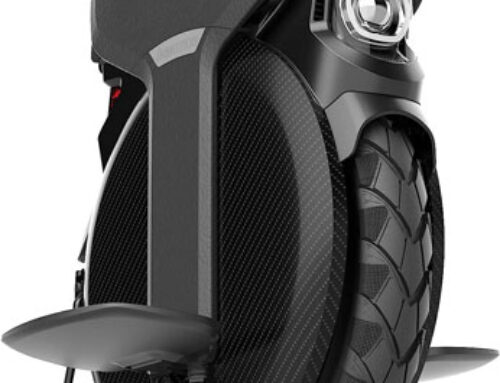
CycleBoard Rover All-Terrain Board Review
Most electric skateboards are built for smooth pavement and polished decks. The CycleBoard Rover was built for everything else. With its rugged three-wheel lean-steer design, chunky off-road tires, and a platform that sits closer to a mountain longboard than a street cruiser, the Rover is the kind of board that makes gravel paths and grass hills feel like fair game. The question is: does it actually deliver on that all-terrain promise, or is it just a heftier board with a heavier price tag?
We put the Rover through its paces on mixed terrain — packed dirt, gravel, light grass, and suburban pavement — and here is our honest breakdown. As always, confirm the latest specifications and pricing directly with CycleBoard before purchasing, since specs can change between production runs.
Overview: What Is the CycleBoard Rover?
The Rover is CycleBoard’s purpose-built all-terrain model. Like all CycleBoard products, it uses a three-wheel lean-steer system — two rear wheels and one front wheel — that you steer by shifting your body weight. There is no handheld remote for steering (though the throttle and brake are remote-controlled). If you have ridden a traditional skateboard or longboard, the lean-steer feel translates quickly. If you haven’t, expect a 15–30 minute learning curve before it clicks.
Where the Rover separates itself from CycleBoard’s street-oriented models like the Elite Pro is in the tires, suspension, and deck stance. The Rover runs wide, air-filled knobby tires that absorb bumps and grip loose surfaces. It is heavier and bulkier than the Elite Pro, which is the tradeoff you make for going off-road.
Design and Build Quality
The Rover looks the part. The deck is wide and low, giving you a stable platform that does not feel twitchy underfoot even when the surface gets unpredictable. The frame is aluminum with reinforced contact points, and the overall construction feels genuinely solid rather than hollow or plasticky.
- Deck width: Wider than the Elite Pro, accommodating a broader riding stance for stability
- Tires: Air-filled, knobby all-terrain rubber — not foam-filled or solid
- Three-wheel layout: Single front wheel for turning response, dual rear wheels for traction and stability
- Remote: Thumb-wheel throttle with regenerative braking; well-built and comfortable to hold
- Weight: Heavier than street boards — plan for that if you need to carry it up stairs
One thing worth noting: the Rover is not a board you will want to lug through airports. It is a ride-it, park-it machine. For portability-first buyers, the electric scooter category may be a better fit.
All-Terrain Performance
This is where the Rover earns its name. On gravel and packed dirt, the knobby tires grip confidently and the three-wheel layout keeps the board planted. You feel the surface beneath you, but in an informative way rather than a bone-rattling way. The air-filled tires do real work here — they absorb small rocks and root ridges that would stop a hard-wheel street board cold.
Light grass is manageable at moderate speeds, though deep or wet grass will bog down the motor like it would any electric board. Cracked sidewalks and expansion joints that would rattle a street cruiser are genuinely comfortable on the Rover. The transition from pavement to gravel and back is smooth enough that you can take mixed-surface routes without thinking twice about it.
Steep inclines are where weight and motor power trade off. The Rover handles hills well for its class, but heavier riders on steeper grades will notice motor strain. Check the current hill-grade spec on CycleBoard’s site against your typical riding terrain before buying.
Speed and Range
Exact speed and range figures for the Rover vary by model year and configuration, so treat any number you see on review sites — including this one — as a starting point rather than a guarantee. That said, here is the real-world picture based on current-generation performance:
- Top speed: Roughly in the 20–23 mph range on flat pavement at the time of this review — verify current specs before buying
- Range: Approximately 15–20 miles under mixed conditions; terrain, rider weight, and hills reduce range meaningfully
- Charge time: A few hours to full; CycleBoard’s standard charger is included
- Regenerative braking: Standard — helps extend range on downhill sections
One honest note on range: off-road riding chews through battery faster than smooth pavement. If you’re planning longer trail rides, budget for shorter range than the rated spec suggests.
Pros and Cons
- Pro: Genuinely capable on mixed terrain — gravel, dirt, cracked pavement handled confidently
- Pro: Three-wheel lean-steer feels intuitive for anyone with skateboard or snowboard experience
- Pro: Solid aluminum build — this does not feel like a toy
- Pro: Air-filled knobby tires absorb bumps that would stop a street board
- Pro: Regenerative braking on the remote adds range and control on hills
- Con: Heavy — carrying it is a workout; not a commuter pack-and-carry board
- Con: Learning curve for the lean-steer system if you have no board background
- Con: Premium price point — this is a serious investment
- Con: Off-road use reduces range noticeably from rated spec
- Con: Less nimble on tight urban streets than a traditional e-skateboard
Safety Note
Any motorized personal mobility device carries real injury risk, especially at off-road speeds. Always wear a helmet — ideally a full-face helmet for off-road use — along with wrist guards, knee pads, and elbow pads. The U.S. Consumer Product Safety Commission (CPSC) provides up-to-date safety guidance on personal electric mobility devices that is worth reviewing before your first ride.
Verdict
The CycleBoard Rover is a well-built, genuinely capable all-terrain board that does exactly what CycleBoard designed it to do. If your riding life includes more than just smooth suburban sidewalks — if you want to take dirt paths, handle cracked pavement without grimacing, and ride with the confidence that the surface won’t beat you up — the Rover is the right tool. It is heavier, pricier, and less portable than a street-focused board, but for riders who actually want off-road capability rather than just off-road aesthetics, those tradeoffs are worth it.
If your riding is primarily on smooth pavement and you want a lighter, faster, more commuter-friendly CycleBoard experience, take a closer look at the Elite Pro instead. But if the trail is calling? The Rover answers.
Frequently asked questions
What is the difference between the CycleBoard Rover and the CycleBoard Elite Pro?
The Rover is built for all-terrain riding, with wide air-filled knobby tires, a broader stance, and heavier construction designed to handle gravel, dirt, and rough pavement. The Elite Pro is CycleBoard’s street-oriented model — lighter, faster on smooth pavement, and more portable. Choose the Rover if you ride mixed or rough terrain; choose the Elite Pro if smooth pavement is your primary surface.
Can the CycleBoard Rover actually handle off-road trails?
Yes, to a meaningful degree. The Rover handles packed dirt, gravel, light grass, and rough pavement confidently. It is not a full mountain-bike replacement, and deep mud or very steep technical trails will challenge it, but for mixed-use suburban and light trail riding it performs well beyond what any street electric skateboard can manage.
How fast does the CycleBoard Rover go and how far can it travel on a charge?
Based on current-generation specs, the Rover reaches approximately 20–23 mph on flat pavement, with a range of roughly 15–20 miles under mixed conditions. Off-road terrain, hills, and heavier riders will reduce both speed and range. Always verify current specifications directly with CycleBoard, as specs can change between production runs.
Is the CycleBoard Rover suitable for beginners?
It depends on your background. The three-wheel lean-steer system is intuitive for anyone with skateboarding, snowboarding, or surfing experience. True beginners with no board background should expect a learning curve of 15–30 minutes to feel comfortable. Because it can reach high speeds on rough terrain, full protective gear — helmet, wrist guards, knee and elbow pads — is essential for all riders, not just beginners.
Who is the CycleBoard Rover best suited for?
The Rover is ideal for adult enthusiasts who want a single board that can handle both pavement and mixed-terrain riding without switching gear. It suits riders who commute partly on rough paths or who enjoy recreational trail riding. It is not the best fit for those who need a lightweight, portable commuter board or who ride exclusively on smooth surfaces — for those use cases, a lighter street e-skateboard or an electric scooter will serve better.
Why trust ScooterMcGoo?
We ride this stuff before we rank it — commuting on it, putting our families on it — and we tell you the truth, including when something isn’t worth your money.
As an Amazon Associate we earn from qualifying purchases (tag: largedog20-20). We only recommend gear we’d ride ourselves. Prices and availability change — check the live listing.